
Sponsors Dublin City Council Arts Council of Ireland Fire Canon Ireland

Blog

Goodbye July!

Goodbye July!

The month of July is gone, so quickly! What a great time we had this year! What do you think?
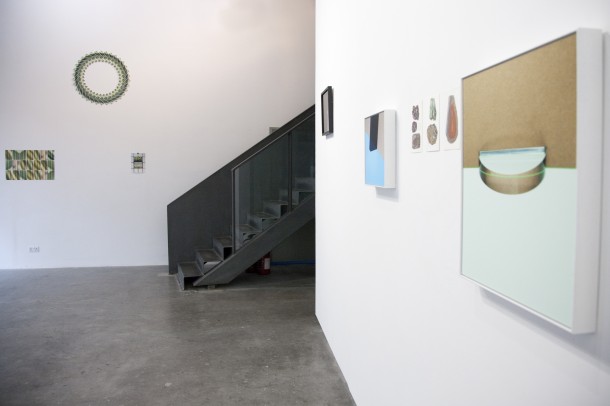
We have exciting news regarding PhotoIreland’s brand new space dedicated to Photography all year round: a new home for The Library Project, and a space for exhibitions, workshops and talks outside the festival period. A very interesting programme is being developed, and we would love to let you know more in good time – stay tuned!

Coming up this November 22nd, Après Paris will be the first event to be celebrated in our new space. Après Paris represents a unique opportunity to stay informed about the different events happening in Paris around the Paris Photo weekend (15-18 Nov), developed in particular for those who can not make it to Paris, and for those coming back from the events wanting to share their experience and impressions. We will have some special guests coming from Paris, that we will be announcing shortly.

Before we say ‘goodbye for now’, a reminder of the shows still open during August and September:

August
El otro lado del alma/The Other Side of the Soul Instituto Cervantes
Jean Revillard Sarah on the Bridge, The Copper House Gallery
Evelyn Hofer Dublin and Other Portraits, Gallery of Photography
The Seán Hillen Collection NPA
Kimura Ihei in Paris: 1954-55 Alliance Française
Tara Oceans East Pier Battery, Dún Laoghaire Harbour
Remote Coral Reefs: Tara Oceans National Maritime Museum of Ireland
RHA Annual Exhibition 2012 RHA
Adam Patterson A Very Normal Place, RUA RED
Phil Behan The Karen of Mayo, Irish Aid Information Centre
Doreen Kennedy Mono No Aware, The National Botanic Gardens
Stephen Doyle Time Served, Inspirational Arts Gallery
Adapt Broadstone Studios & Gallery
Paul Kelly Landless in Chaco, Irish Aid Information Centre
Sergey Sergeev Pilgrimage, Centre for Creative Practices
Slide Project(or) The Bernard Shaw
Moira Sweeney Stevedoring Stories, CHQ

September
The Seán Hillen Collection NPA
Kimura Ihei in Paris: 1954-55 Alliance Française


Thanks to all those who made PhotoIreland Festival 2012 a great success.
Goodbye for now!

Leave a comment

The People’s Choice Award

The People's Choice Award

Competition time!

We have 3 Blurb Books gift cards worth €50 each to give away, and we want to give them to you for helping us find out which of the exhibitions and events was the most loved and enjoyed this year. All you have to do is to vote for your favourite exhibition or event using the Google+, Twitter or Facebook buttons that you will find underneath the title in each page. Easy enough?

As you will see, there has been already a lot of voting going on during the month, so if you want your favourite to win, make sure you tell your friends! If you liked or shared already your favourite, don’t worry we will count that in too!

We will select 3 lucky winners from amongst all the voters on Friday 3rd August at 1pm. We will announce then the winner of The People’s Choice Award – who will receive tones of love, respect and appreciation.

Vote, Like, Share!

Leave a comment

Enjoy the last Weekend of PhotoIreland Festival 2012

Enjoy the last Weekend of PhotoIreland Festival 2012

The last weekend of PhotoIreland Festival 2012 is upon us. Here’s a quick lit of what you can enjoy today:

Only today
1pm Monochromatic Workshop The Academy of Photography
7pm Artist Talk by Seán Hillen NPA

Closing
Mark McCullough/Suzanne Mooney Disparate Geometry, Monster Truck
Adrian Reilly Several Distances at Once, Monster Truck
Dublin Camera Club Annual Exhibition 2012
Vincent O’Byrne Post Photography, Dublin Camera Club

Running
Jean Revillard Sarah on the Bridge, The Copper House Gallery
Evelyn Hofer Dublin and Other Portraits, Gallery of Photography
The Seán Hillen Collection NPA
Jens Komossa Television Rooms & Senija Topcic Decency, Goethe-Institut
RHA Annual Exhibition 2012 RHA
Adam Patterson A Very Normal Place, RUA RED
John Lalor Signed Out, Darc Space
Ciara O’Halloran The Other Room, Eight Gallery
Ailbhe Greaney A View Is Where We Are Not, The Little Museum of Dublin
Paul McCarthy Na Caipíní, The Market Bar
Tara Oceans East Pier Battery, Dún Laoghaire Harbour
Remote Coral Reefs: Tara Oceans National Maritime Museum of Ireland
Conor Blundell Dublin Lights, Brannigans Bar
Joby Hickey 20,000km, Sebastian Guinness Gallery
Helena Tobin A Space Between, Signal Arts Gallery
Doreen Kennedy Mono No Aware, The National Botanic Gardens
Stephen Doyle Time Served, Inspirational Arts Gallery
Adapt Broadstone Studios & Gallery
Inland Light House Cinema
Brian Cregan The Glass Garden, Exchange Dublin
Paul Kelly Landless in Chaco, Irish Aid Information Centre
Sergey Sergeev Pilgrimage, Centre for Creative Practices
Slide Project(or), The Bernard Shaw

Leave a comment

The Weekend Starts Now!

Thursday 12

Symposium
On Migration: Images, Lives and Objects

Wood Quay Venue
10am-5pm
Special screening of The Mexican Suitcase (2011)

Unsettled, Isabelle Pateer
The Copper House Gallery
Closing party: 7pm

Slideluck Potshow
Moxie Studios
Starts: 7pm

Also on Thursday 12

6pm Gallery Talk: Amelia Stein Oliver Sears Gallery
6pm f/22 MadArt Gallery
6.30pm UU MFA Students Finding Fragments, South Studios
7pm BurnIn Company Half Afraid To Think, 74 Benburb Street
7pm Andrzej Rozycki Photosophy, Centre for Creative Practices
7pm Conor Blundell Dublin Lights, Brannigans Bar


Friday 13

Main Shows at Moxie Studios – Opening 6pm

ExhibitionsPortfolio ShowcasePhotobooksProjectionsFood Stalls


View PhotoIreland Festival 2012 in a larger map

On Migration 14 — 22 Jul
Curated by Moritz Neümuller

Dinu Li, Max Becher & Andrea Robbins, Mark Curran, Francisca Lopez, 
Gergely Laszlo, Anthony Luvera, Carlos Albalá, Roger Eberhard and James Nizam, 
Tina Remiz, Darek Fortas, Ieva Baltaduonyte, and Debbie Castro.

Books on Migration 13 — 22 Jul
Curated by Irène Attinger
Featuring works by Augustus Sherman, Lewis Hine, Dorothea Lange, John Berger & Jean Mohr, Donald McCullin, Sebastião Salgado, Josef Koudelka, David Goldblatt, Frederic Brenner, Ad van Denderen, Alex Webb, Rip Hopkins, Ito Barrada, Joakim Eskildsen, Andreas Seibert, Patrick Zachmann, Jean Revillard, Alban Kakulya & Yann Mingard, Espen Rasmussen, and Thomas Mailaender.

Magazines on the Wall: 10 projects on Migration 13 — 22 Jul
Curated by five international photography magazines: Camera Austria (Austria), European Photography (Germany), Fotografija (Slovenia) Kwartalnik Fotografia, (Poland), and Fotograf magazine (Czech Republic).

Book & Magazine Fair 14 — 15 Jul
With 15 publishers present, and a programme of talks, workshops, 
and book presentations, the fair has been designed for your delight.
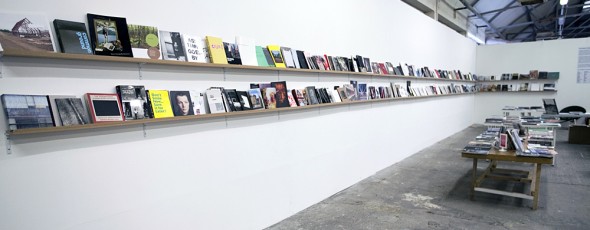
Showcasing The Library Project, the festival collection of over 700 books from 150 publishers worldwide.

Portfolio 12 – International Portfolio Reviews 14 — 15 Jul
Special Portfolio Showcase
This year, the 45 participants come from over 20 countries, such as Japan, Mexico, Canada, Australia, Russia, United States, the Netherlands, Portugal, the Philippines, Finland, Lithuania, Greece, Germany, France, the United Kingdom, and Ireland. The reviewer list includes curators, gallery owners, festival directors, publishers and other international photography professionals.

Also on Friday 13

1pm Grad Talk, Sue Rainsford Moxie Studios
3pm Artist Talk: Maurice Gunning NPA
6pm ArtistTalk on the output of Andrzej Rozycki Photosophy, Centre for Creative Practices
7pm Film – What is Conceptual Photography Moxie Studios


Saturday 14

Sarah on The Bridge, Jean Revillard 16 Jul — 4 Aug
The Copper House Gallery
Opening: 8pm

Book & Magazine Fair Events at Moxie Studios

1pm Creating the Perfect Print Canon Workshop
2pm Doug Dubois talk
3pm PhotoIreland Festival 2013 Presentation
4pm Irène Attinger talk
5pm Gösta Flemming talk
6pm Publishers B&M Fair (Dienacht Magazine, ESC zine, Homepark Press, Ontario Paper)

Also on Saturday 14

10am Black & White Darkroom Workshop The Academy of Photography
12pm Documentary Movie: Photosophy Centre for Creative Practices
8pm Jean Revillard Sarah on the Bridge, The Copper House Gallery


Sunday 15

Book & Magazine Fair Events at Moxie Studios

1pm Creating the Perfect Print Canon Workshop
3.30pm Dewi Lewis talk
4pm Magazines on the Wall talk
5pm David Kronn talk
6pm On the Future of Photography Education

Also on Sunday 15

9.30am Workshop I Institute of Photography
10am Black & White Darkroom Workshop The Academy of Photography
2pm Workshop II Institute of Photography
3pm Jos Menting Circle of Light, The Back Loft

Leave a comment

31 Exhibitions for a sunny Saturday 7th July

Opening Today
6.30pm ‘Where Were You?’ Light House Cinema
7pm buy cheap generic cialis online

2/”>NCAD PDI Students Fourteen 12, The Little Green Street Gallery

Already Running
David Monahan & Maurice Gunning Living – Leaving, NPA
Isabelle Pateer Unsettled, The Copper House Gallery
Evelyn Hofer Dublin and Other Portraits, Gallery of Photography
Jens Komossa Television Rooms & Senija Topcic Decency, Goethe-Institut
Mark McCullough/Suzanne Mooney Disparate Geometry, Monster Truck
Adrian Reilly Several Distances at Once, Monster Truck
RHA Annual Exhibition 2012 RHA
Adam Patterson A Very Normal Place, RUA RED
Mid-Twentieth Century The Molesworth Gallery
Chasing Shadows III CFCP
20×20 Peripheries – Moments from the side Inspirational Arts Gallery
Ruptures 74 Benburb Street
John Lalor Signed Out, Darc Space
Frank Miller Minority Report, Dublin Central Library
DICE Encounters, MadArt Gallery
Kate Nolan Neither, bio.space033
Dublin Camera Club Annual Exhibition 2012
Close to Closure The Back Loft
FLUX South Studios
Evan Buggle Ballyfermot – A Migrating Landscape, Leinster Gallery
Paul Tierney Reflected City, Designist
Tristan Hutchinson Took Strength To Tackle Those Hills, Filmbase
Ciara O’Halloran The Other Room, Eight Gallery
Ailbhe Greaney A View Is Where We Are Not, The Little Museum of Dublin
Paul McCarthy Na Caipíní, The Market Bar
The Hidden City The Bernard Shaw
Vincent O’Byrne Post Photography, Dublin Camera Club
Tara Oceans East Pier Battery, Dún Laoghaire Harbour
Remote Coral Reefs: Tara Oceans National Maritime Museum of Ireland

Leave a comment

PhotoIreland Festival 3rd Edition Opening 7pm Thursday 5 July – Gallery of Photography

Ireland’s International Festival of Photography & Image Culture

Vibrant, friendly, all-inclusive:
A festival for all to enjoy.

Join us for a night of celebration with 13 exhibitions opening around the city of Dublin, and come togeth

er at the Meeting House Square for the opening of Evelyn Hofer ‘Dublin and Other Portraits’ at the Gallery of Photography, and David Monahan & Maurice Gunning, Living-Leaving exhibition at the National Photographic Archive. The official opening of the festival will take place at the Gallery of Photography at 7pm, to coincide with Evelyn Hofer’s keynote exhbition.
We will conclude the evening with a special outdoors video projection in Meeting House Square from 10.30pm.

Evening Schedule
6pm
El otro lado del alma / The Other Side of the Soul Instituto Cervantes
6pm Mark McCullough/Suzanne Mooney Disparate Geometry, Monster Truck
6pm Adrian Reilly Several Distances at Once, Monster Truck
6pm FLUX South Studios
6pm Evan Buggle Ballyfermot – A Migrating Landscape, Leinster Gallery
6pm Tristan Hutchinson Took Strength To Tackle Those Hills, Filmbase
6pm Ciara O’Halloran The Other Room, Eight Gallery
6pm Nicolas Reuland Up in Smoke, No Grants Gallery
6pm Ailbhe Greaney A View Is Where We Are Not, The Little Museum of Dublin
6pm Paul McCarthy Na Caipíní, The Market Bar
6.30pm Evelyn Hofer Dublin and Other Portraits, Gallery of Photography
7pm David Monahan & Maurice Gunning Living – Leaving, National Photographic Archive
7pm Paul Tierney Reflected City, Designist
7pm Official Opening of PhotoIreland Festival 2012, coincinding with Evelyn Hofer opening, Gallery of Photography.
8pm Presentation of David Monahan & Maurice Gunning Living – Leaving, National Photographic Archive.
10.30pm Special Video Projections at the Meeting House Square, Temple Bar.

Let’s celebrate! »

Leave a comment

Diasporas and Transnational Communities

This is an extract of the article “Diasporas, transnational spaces and communities”, by Michel Bruneau, published in R. Bauböck, Th. Faist (eds), Diaspora and Transnationalism: concepts, theories and methods, Amsterdam University

Press, 2010, p. 35-49, which is provided here in full text. In this version, emphasis in bold letters has been added for better readability.

Introduction

The term Diaspora, long used only to describe the dispersion of the Jewish people throughout the world, has in the last thirty years elicited unprecedented interest and has attracted attention not limited to the academic world, but also from the media and is now part of everyday speech. It has come into such generalised use as to be applied to all forms of migrations and dispersion of a people, even if not as a result of migration. The connotation of this term corresponds not only to a development and generalisation of international migrations throughout the world, but also to a weakening, or at least a limitation, of the role played by Nation-States, at a time when globalisation has become a dominant process. It is typically a term taken both from social sciences and everyday speech, which causes wide confusion as to its precise meaning. We are addressing the notion of Diaspora from a geographical stance, from a point of view that takes in account its materiality through the space, the place and the territory. We postulate that this geographical dimension is pertinent to the diasporic phenomenon.

The notion of Diaspora

A Diaspora exists and is reproduced by relying on everything that creates a bond in a place among those who want to group together and maintain, from a distance, relations with other groups, installed in other places but having the same identity. This bond can come in different forms, such as family, community, religious, socio-political, economic bonds or the shared memory of a catastrophe or trauma suffered by the members of the Diaspora or the forebears. A Diaspora has a symbolic and “iconographic” capital that enables it to reproduce and overcome the – often considerable – obstacle of distance separating its communities.

The four criteria for a Diaspora

Diaspora areas and territories must be gauged first in the host country, where the community bond plays the essential role, then in the country or territory of origin – a pole of attraction – through memory, and finally through the system of relations in the network space that connects these different poles. The term Diaspora often has more of a metaphorical than an instrumental role. We can narrow down the different criteria suggested by most authors to four essential ones:

- The population has been dispersed in several places, not immediately neighbouring of the territory of origin, under pressure (disaster, catastrophe, famine, abject poverty).

- The choice of countries and cities of destination is carried out in accordance with the structure of migratory chains, which link migrants with those already installed in the host countries.

- This population is integrated without being assimilated in the host countries, i.e. it retains a rather strong identity awareness linked to the memory of the territory, of the society of origin and its history

- These dispersed groups of migrants (or groups stemming from migration) preserve and develop among them and with the society of origin, if the latter still exists, multiple exchange relations (people, goods of various natures, information, etc.) organised under networks. Relations tend to be horizontal rather than vertical.

For a Diaspora to be able to live on by transmitting its identity from one generation to the next, it must, have places for periodic gathering of a religious, cultural or political nature, or for all three at once, in which it can concentrate on the main elements of its iconography. These can be sanctuaries (churches, synagogues, mosques, etc.), community premises (conference rooms and theatres, libraries, sports clubs, etc.), or monuments that can be used for commemorations, perpetuate memory. They also include restaurants and grocery shops, newsagents and the media (newspapers, community magazines, local radio and television stations, websites). These various places can be concentrated in the same “ethnic” quarter, the same locality, or be dispersed throughout a city or a larger territory.

Four major types of Diasporas

The different Diasporas are deployed on a world scale at the beginning of the 21st century, with an unequal degree of globalisation and at times a more or less confirmed continental tropism among them. In every Diaspora, the folklore, cuisine, language and culture in the wide sense (literature, cinema, music, press), community life and family bonds play a fundamental role. Family connections constitute the very fabric of the Diaspora, in particular those stemming from Asia and the eastern Mediterranean, which are characterised by the existence of extended families. Similarly, the community link is always present in and constitutive of every Diaspora. The most distinguishing characteristics are the unequal degree of their structuring and their organisation, and the more or less decisive influence exerted by their nation of origin, when it exists. Religion, enterprise and politics are the three major fields through which these two discriminating characteristics manifest themselves. At the current state of research, we can only sketch a typology according to these criteria from the example of some Diasporas.

A first set of Diasporas is structured round an entrepreneurial pole; everything else is subordinated to it or plays only a secondary role. The Chinese, Indian and Lebanese Diasporas are the best examples of this. Essentially because it is diverse, religion does not play a structuring role. The nation-state of origin does not exercise any decisive influence, either because it is pluralist (Hong Kong, Taiwan, mainland China, South-East Asia in the case of the Chinese), or because it is deliberately discrete and intervenes only in case of extreme difficulties (the case of India), or because it is too weak and divided (the case of Lebanon). Entrepreneurship constitutes the central element of the reproduction strategy of these Diasporas.

Another set of Diasporas is that in which religion, often associated to a language, is the main structuring element: this is the case of the Jewish, Greek, Armenian and Assyro-Chaldean Diasporas. This religion is monotheistic and strongly connected to a sacred language, be it Hebrew, Greek, Aramaic, or Armenian. In the case of the Jews, this language was long only a sacred language, but its identity-shaping force was such, that it was chosen as the national language for the Jewish state, Israel, in 1948. Greek and Armenian are taught in schools alongside religion in the schools of the Diaspora. Enterprises play a very important role in the life of these Jewish, Greek and Armenian Diasporas, but they are not the central pole that ensures the reproduction of the Diaspora in the long run. That pole is religion: the synagogue and the church, with a pronounced ethnic tint, are the constitutive elements of these Diaspora communities. On the other hand, ever since it has existed, the Nation-State has had an increasingly stronger influence on its Diaspora. Nevertheless, even in the Greek case, where this influence is the greatest, the Diaspora, the cohesion of which is secured by the Orthodox church, has managed to preserve a relative independence, after the Holy Synod of the Athens Church (1908-1922) tried to take hold of the Greek communities in the United States, with the restoration of the jurisdiction of the Ecumenical Patriarchate. Since the independence of Armenia in 1991, the Armenian State has also exerted a growing influence but has not, for the moment at least, acquired the weight of the Greek or of the Jewish State in respect to their respective Diaspora. Religion remains the main element of Armenianness, the Apostolic Church the best defender of the language, culture, memory, and the “Motherland.”

A third set of Diasporas, on which we have observations on a shorter duration, is organised chiefly round a political pole, when the territory of origin is dominated by a foreign power and the main aspiration of the population of the Diaspora, is the creation of a Nation-State. We may cite the example of the Palestinian Diaspora, which had succeeded in establishing a real state in exile, the Palestinian Liberation Organisation (PLO), whose objective to establish a Nation-State next to the State of Israel has already been partially achieved by the creation of the Palestinian Authority endowed with territories that it has administered since 1994. The religious content of the national identity of the Jews or the Armenians is absent among the Palestinians who are Muslims, but also Christians. Their collective memory is rooted in the historical events that mark estrangements, the main one of which is the catastrophe (nakba) of 1948.

A fourth set is organised around a racial and cultural pole; this is the case of the black Diaspora, on which hinge several ways of defining identity. Centred on the notion of negritude, its originality in relation to the foregoing lies first in the fact that this Diaspora has no direct affiliation with the society or societies, or territory or territories of origin. This Diaspora stands out first by the continental scope and the diversity of its territory or territories of origin: the coasts of West and Central Africa as a point of departure of the exodus, but also the very vast continental hinterland that is very difficult to define, going as far as Ethiopia and Sudan, and even Egypt.


The black Diaspora is defined first and foremost by the socially constructed negro-race, and only subsequently by culture, the definition and origin of which are subject to various debates and interpretations. There is extensive vagueness on this front, due to the traumatic experiences under which this Diaspora formed: the slave-trade and slavery of the plantation estates. These two founding phenomena of the black Diaspora have levelled and clouded the identities and cultures of origin to the point of making them disappear in part from the conscience of the populations concerned. These populations define themselves more by their social condition and their “race” – the only visible element – in the societies into which they were brought, than by their identity and culture of origin, and even less by their nationality, of which they have no clear, if any conscience at all.


Transnational communities

It is therefore difficult to define a Diaspora from the economic and political migration of a people stemming from a segmented society and comprising notable differences of identity. To take better account of these phenomena, researchers such as Riva Kastoriano have suggested the notion of transnational community. Countries at the edge of the industrialised and tertiarised world of the major powers of the North (United States, Canada, Western Europe, Japan), which often are former colonies or old countries of the Third World, are sending more and more migrants in search of employment and remittances to their communities of origin, with which they keep strong ties. These are mostly unskilled economic migrants from rural areas. They are organised from a village, a basic rural community, to which the migrants remain very attached and to which they return periodically. The family structure, more than the village community of origin, is essential in explaining the cohesion of the networks. Those from a rural community in a Latin American country or the Philippines, for instance, migrate to more and more urban centres of variable sizes in the United States. A migration movement is established between this place of origin and the places of settlement and work. The migration territory also comprises relay places, most often a large city, the hub of the migratory route network: Dallas or Chicago for Mexicans from Ocampo, Buenos Aires for the Bolivians from the Cochabamba region. The strong association with these different places thanks to the movement of the population of one village, where the dominant activity is migration under different forms, constitutes a transnational migration territory.

A transnational community is based on the specific know-how of mobility, a “migration expertise” which is the social capital of the inhabitants of these places, highly marked by migration, who have made it their essential activity. The mobility of these peasants may be based on the experience of mountain peasantry, which has always had to move with the seasons, whether in transhumance in certain cases, or because of several ecological stages in the case of Andean peasants. Peoples with a long nomadic tradition like the Turks or Mongols can also be moulded more easily in these transnational spaces. A transnational community links the global to the local, networking places of highly unequal importance without hierarchy between these different hubs. The role of the border is very highly relativised by a migrant population whose essential element of identity is knowing how to cross the border, passing through the border area, and living beyond it, whilst avoiding expulsion.

These migrants come from a Nation-State, where they have lived for a relatively long time, to return periodically, investing part of their income in their village of origin. They left at best to stay there, or if not themselves, at least part of their family. The members of a transnational community seek to acquire the citizenship of their host country, while retaining that of their country of origin. This double affiliation is not only a matter of ease, but also a way of life. Contrary to the Diasporas, there was no uprooting from the territory and the society of origin, nor trauma. There is no desire to return, because transmigrants never actually left their place of origin, with which they retain family and community ties that are much facilitated by the growth, regularity and safety of communications.

The concept of the Transnational Community is also used by researchers who have studied transnational nationalism. The Turkish transnational community, for example, lives in a four-dimensional space: the immigration country, the country of origin, the immigrant communities herself, and the transnational space of the European Union. The “at distance nationalism” refers to the nation-state of departure, Turkey, which acts on the exile population by the way of language, religion, double citizenship. This nation-state tries to strengthen as much as possible the loyalty of its nationals outside. But the transnational networks of migrant associations can bypass the states acting directly on transnational European institutions. We observe the emergence of a transnational space, characterized by the dense interaction of actors belonging to different traditions (Islamist and laic Turcs, Alevis, Kurds, Lazes…). It is a new space of political socialization, of identification beyond the national societies. For Kastoryano, the notion of Diaspora should be better applied to populations scattered before the making of their nation-state like Jews, Armenians… from whom the nationalism refers to a mythical place, to a territory to be recovered, to a future state-building.

Originality and value of the notions of Diaspora and transnational community

The value of the notion of Diaspora is that it shows the sedimentation, in time, often in the long term, of communities dispersed in the world, and more or less diverse depending on the case. These Diasporas are characterised by the search for a certain cultural or religious – at times even political – unity. They have been formed, through the course of time, by several waves of migration, each of which could have different or several causes at once. It is this sedimentation in the long run that makes the Diaspora, unlike the transnational community, which has been formed recently owing to a call for labour, or unlike smugglers who depend on the underground economy. The Diaspora members, wherever they find themselves, negotiate their cultural and social unity with the local and national shapes, as their integration is characterised by intergenerational trajectories.

Unlike people of the Diaspora, transmigrants and cross-border entrepreneurs or smugglers do not seek to establish a social network destined to last, a transnational social group based on the richness of a symbolic capital and a memory transmitted from one generation to the next. They seek first and foremost to build a house in their village and climb the social ladder there, and then in their place of settlement, when such a place exists. Transmigrants are far too dependent on their Nation-State of origin and on their host country to become as independent and creators as people of the Diaspora. The social group to which they belong often does not exceed the community of origin and the network of its migrants, whereas the people of the Diaspora have the feeling of belonging to a nation in exile, dispersed throughout the world, and bearing an ideal. But transnational communities, such as the Turkish one, are sometimes bearer of a transnational nationalism, which appears with the interactions of their different actors and try to influence the nation-state of their origin as the one of their settlement. Double citizenship and migratory circulation in the frame of a transnational region such as the EU favour the emergence of new trans-borders societies different from the long term Diasporas.


Please find the bibliographic references in the full text version of this article.


Leave a comment

No one chooses to be a refugee – World Refugee Day – June 20

Every minute eight people leave everything behind to escape war, persecution or terror.
If conflict threatened your family, what would you do? Stay and risk your lives? Or try to flee, and risk kidnap, rape or torture?
For many refugees the choice is between the horrific or something worse.

UNHCR – The Office of the United Nations High Commissioner for Refugees was established on December 14, 1950 by the United Nations General Assembly. The agency is mandated to lead and co-ordinate international action to protect refugees and resolve refugee problems worldwide. Its primary purpose is to safeguard the rights and well-being of refugees. It strives to ensure that everyone can exercise the right to seek asylum and find safe refuge in another State, with the option to return home voluntarily, integrate locally or to resettle in a third country. It also has a mandate to help stateless people.

In more than six decades, the agency has helped tens of millions of people restart their lives. Today, a staff of some 7,685 people in more than 125 countries continues to help some 33.9 million persons.

1 Comment

“Migration and Climate Change” A UNESCO publication on one of the greatest challenges facing our time

buy cialis no prescription

t=”Book Cover” width=”368″ height=”500″ />

UNESCO Publishing
Edited by Etienne Piguet, Antoine Pecoud and Paul de Guchteneire
2011

Climate change is becoming an increasingly significant factor in migration, even if nightmare scenarios predicting a human tide of “environmental refugees” are unfounded and counter-productive, concludes the first authoritative overview of the relationship between climate change and migration, published by UNESCO and Cambridge University Press.

“Migration and Climate Change” brings together the views of 26 leading experts from a range of disciplines such as demography, climatology, economics, geography, anthropology and law. They present case studies from Bangladesh, Brazil, Nepal and the islands of the Pacific, analyzing the often alarming statistics and tearing down the myths associated with one of the most-discussed but least-understood aspects of climate change.
“This new publication is a vital contribution to one of the major debates of our time,” said UNESCO Director-General Irina Bokova, who on 1 July took over the chairmanship of the Global Migration Group (1). “We have all read startling headlines warning that climate change will force tens of millions of people to move. This book looks at the evidence for these claims, shows us the real issues at stake – especially those concerning human rights. It also provides some sobering guidance for policy and decision-makers at local, national and international level.”

Full review on UNESCO website.

2 Comments

Moving Lives: short film explores Irish migration

Mairéad McClean’s short film Moving Lives, a collaboration with the Live and Learn initiative of National Museums Northern Ireland, presents the lived experience of Irish migration from multiple vantage points through space, time and memory.

Representing movements in several directions (immigration, emigration, return migration) and stages (leaving, journeying, arriving), the film weaves together the stories of migrants from the distant past up until recent times narrated in their own voices, through their correspondence, and in the multi-generational memories passed to their descendants.

Filmed on location at the Ulster American Folk Park – an outdoor migration museum in County Tyrone – in the enclosed setting of a dimly-lit nineteenth-century ‘old world’ mass house, the film challenges the illusory fixedness of its backdrop with an exploration of lives moving through space and time, transcending standard chronologies and uncovering universal experience beyond the Irish context.

Article source and full lenght text: Irish Times, Generation Emigration Blog.

Leave a comment

Page 1 of 812345...Last »

Stay informed!

Subscribe to PhotoIreland's email list and stay informed of news, events, and competitions. Follow this link »